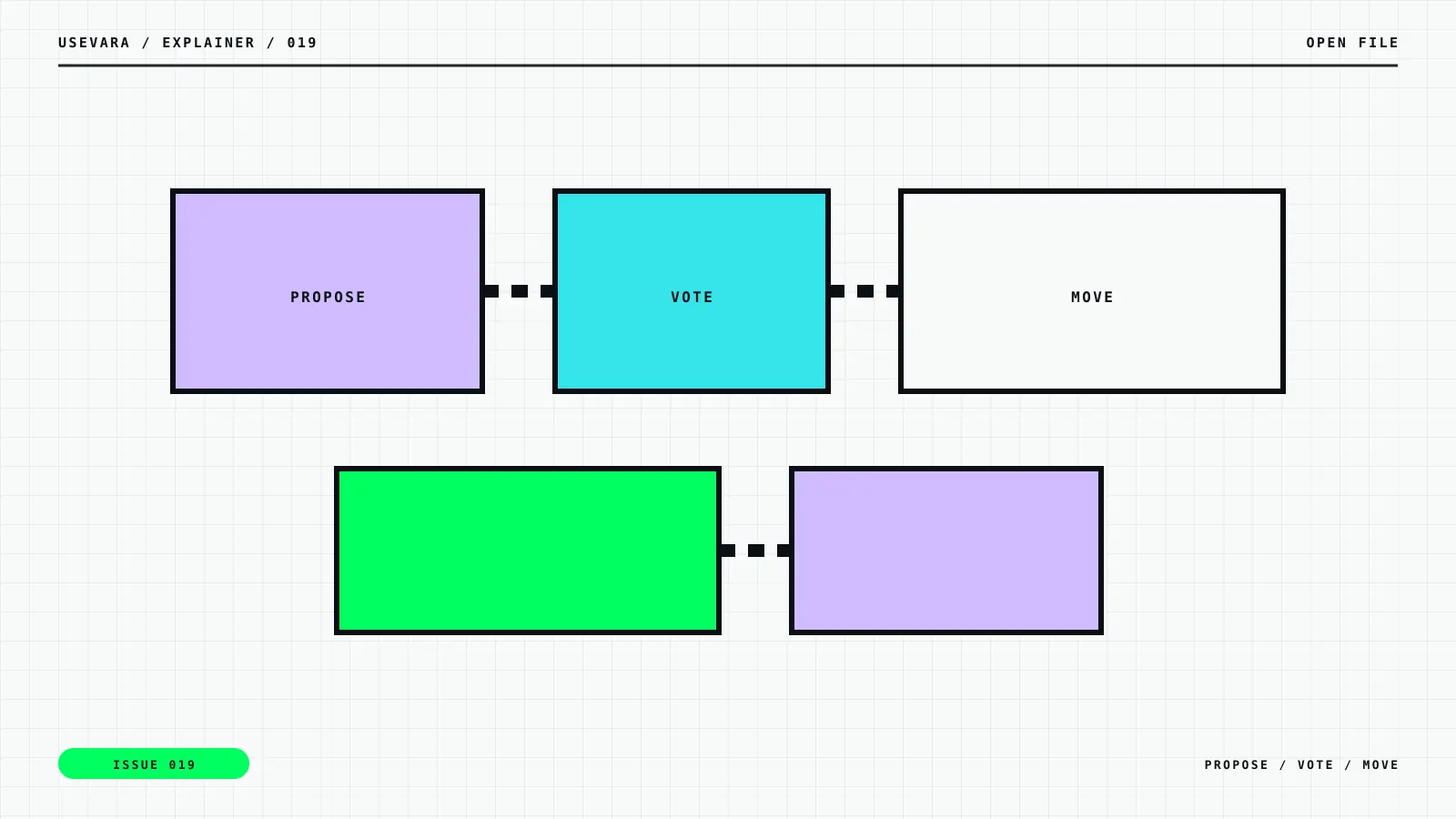
Somewhere in a network’s governance forum, somebody is trying to change a setting, approve an upgrade or spend community funds. Those decisions eventually reach the apps everyone else uses. Vara’s OpenGov gives VARA holders a way into that room.
Vara’s governance docs describe OpenGov as the framework for proposing and deciding network changes. Vara’s overview says token holders can participate. The team has also published explainers on how it works and what it can unlock. That is the machinery. The interesting part is what a particular decision changes.
What can a decision touch?
A network’s rules and priorities do not fall from the sky. Governance can provide a route for changing parameters, directing resources or approving upgrades, depending on the proposal track and the framework’s limits. The exact authority of a given referendum matters more than a slogan about community control. Read the proposal and its track before deciding what a yes vote would actually do.
OpenGov includes delegation and conviction voting. In ordinary language, people who do not want to study every referendum can assign voting power to someone they trust; people can also choose voting commitments with different weight and lockup consequences. Those choices have costs. Delegating is not the same as paying attention, and locking tokens is not a decorative gesture.
Follow one decision all the way through
Say a proposal asks the treasury to fund a new integration. The referendum should tell you who receives the funds, what they will deliver and when the community can inspect the result. A parameter change has a different story: which behavior changes, when does it take effect and who feels it? Those examples are hypothetical, but the questions are useful for a real referendum.
You do not need to treat every referendum as a constitutional crisis. Some will be dull. That is fine. Dull decisions about budgets and configuration can shape the products that eventually feel effortless.
What UseVara will watch
We are interested in governance when it changes what builders or users can actually do. A proposal that makes deployment easier, funds a useful integration or alters the terms of running the network has a story. The vote is only the middle of that story. The ending is whether the promised change happened.
If you want to inspect the current process, start with the official governance documentation and Vara’s practical voting guide. Check the active referendum itself for the current rules. If you want to know who moved the furniture, follow the proposal from its first description through enactment.